

Only You Can See This
Essay: The Dead Internet Theory Says Everyone Else is a Bot

For most of the web’s history, every page you opened was made by a human being. A stranger wrote the review that talked you out of a bad hotel. A self-proclaimed expert answered your question at two in the morning, for free, because they wanted you to have the answer.
The internet was a place filled with people.
Then the Dead Internet Theory emerged, built on the suspicion that most of what you scroll through is simply machines talking to machines, with real users quietly disappearing around 2016 as bots and algorithms filled the empty space.
The theory took hold before ChatGPT existed, describing a flood of fake content that had not been built yet.
But then we built it.
-Josh
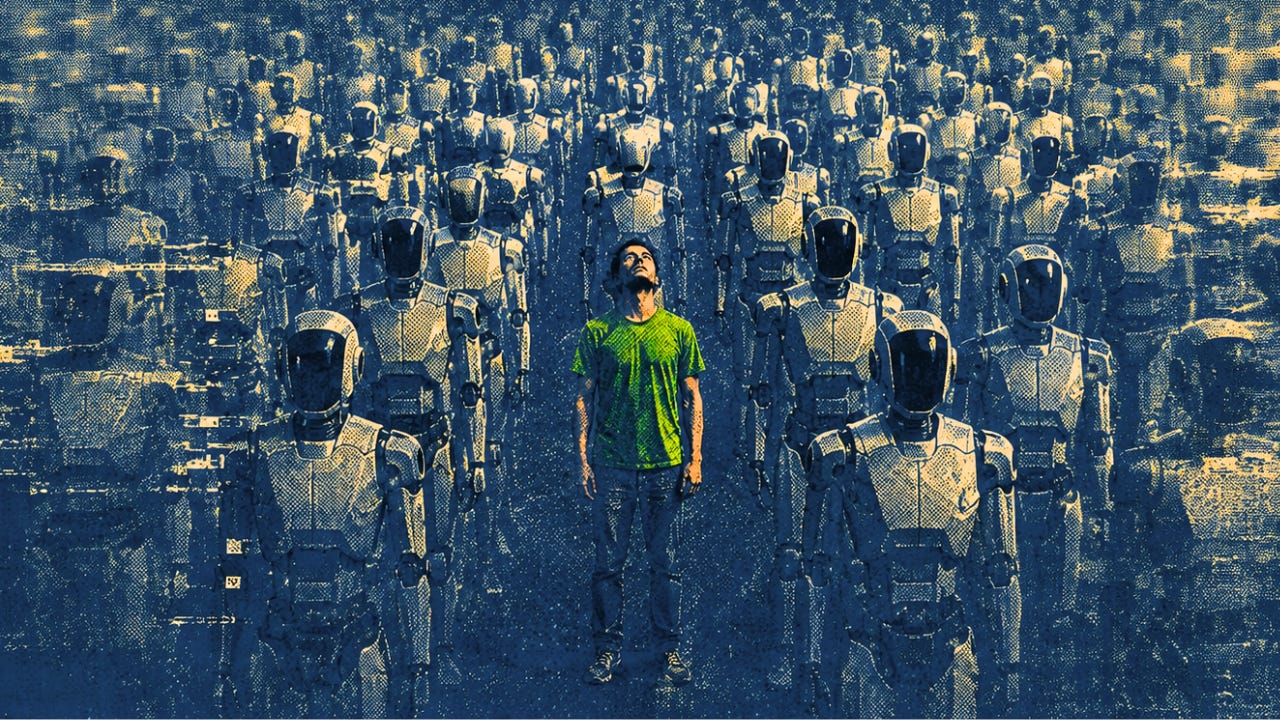
Bots Control the Internet
The web became the largest gathering of human minds in history, and as implied, there was always a person on the other end of everything.
Cloudflare put a date on when that changed. This month the company, which observes around a fifth of all websites, reported that bots now generate well over 50% of all web requests.
The figure counts requests rather than hours, and people still own most of the time spent online, but traffic was the metric the web was built to sell, and the machines just took it.
Matthew Prince, Cloudflare’s CEO, had expected the crossover at the end of 2027 and watched it arrive eighteen months early. “Welp, that happened faster than I predicted,” he wrote.
The shift was largely caused by increasingly competent AI agents running our errands. One assistant booking a trip can load a thousand pages so you never load five.
This is relatively harmless until you give that agent a social media profile, have it pose as a human, and start trying to change people’s minds.
In 2016, researchers found nearly one in five election tweets came from automated accounts, steering a conversation millions believed was organic. I wonder what that figure is now, but hopefully the real people out there have been trained to distrust the online crowd.
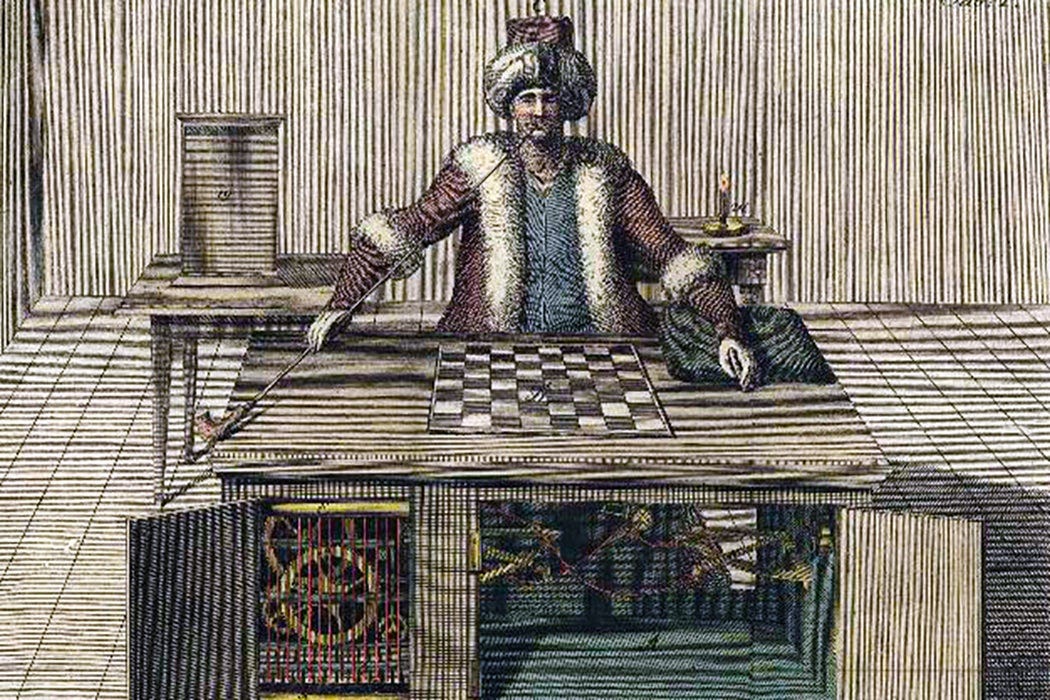
Oh, How The Chess Board Turns
In 1770 a Hungarian inventor toured Europe with a chess-playing machine, the Mechanical Turk. It beat Napoleon, Benjamin Franklin, and convinced crowds a machine could think. In reality, a chess master was folded inside the cabinet, working the arm by candlelight.
In 1950 Alan Turing formalized the same puzzle: if a person with a hidden machine cannot tell it from a person without one, we call it thinking.
We passed the Turing Test a while ago and barely noticed. But now the benefit of the doubt is gone: we look at a face in our feed and wonder whether the person is secretly the machine. If someone beats us at chess, we automatically assume they used a bot.
But what most people overlook is how few real voices we ever heard in the first place.
So You Might Be Dead
The analyst Samo Burja divides the world into live players and dead players: a live player can do something genuinely new, while a dead player only runs the script. By that measure the web was always mostly dead.
In almost every online community, about 90% only watch and 1% ever create anything net new. On Wikipedia, a thousand people write two-thirds of the content seen by 4.4 billion unique monthly visitors.
The bots didn’t really kill a living internet, they just flooded one that was already mostly asleep. A large language model is the ultimate lurker, a machine that averages everything written before it, endlessly fluent and never once new.
If a machine answers your question better than the old forum did, instantly and for everyone, it is fair to ask who is harmed.
But that frames the web as a vending machine, and on those terms the machines win cleanly.
You Have a Superpower
The web was always something magic, like when you met a real new friend on an Xbox server, or a nerd on a forum helped you with a super specific problem. A perfect, preordained answer can help you, but there is no one on the other end of it.
Feed an AI model exclusively the output of other models and it falls apart, starved of the one thing it cannot generate: a person seeing something for the first time.
Genuine reactions. Biological response. Boots-on-the-ground emotional impact. Qualia.
They can’t take that away from you.
The task hasn’t changed since the Turk, or since Turing. Find the live players or become one yourself. The rest, human or machine, was always just traffic.
Thanks for joining us for our latest issue. Now go listen to our podcast :)