

Why Intel Stock Keeps Pumping
Essay: Wall Street gave up on Intel. It's up 456% in 12 months.

Intel stock just climbed 456% in 12 months.
It’s up 182% year-to-date and 118% over the past 30 days.
It’s white-hot, and is, in my honest opinion, one of the biggest mega-cap turnarounds in U.S. history.
Most investors got beaten to the punch here by the U.S. government, which made a $34B investment in Intel last year, but the stock is still being underestimated. Wall Street’s consensus price target is still $75 (lol) — 30% below where the stock trades today and it still astounds me that people don’t see why Intel is one of the best AI investments right now.
Intel is the AI trade nobody saw coming because for three years everyone assumed AI = Nvidia GPUs and they clearly weren’t totally wrong, but about 7 months ago the game changed.
Inference is now more important than training.
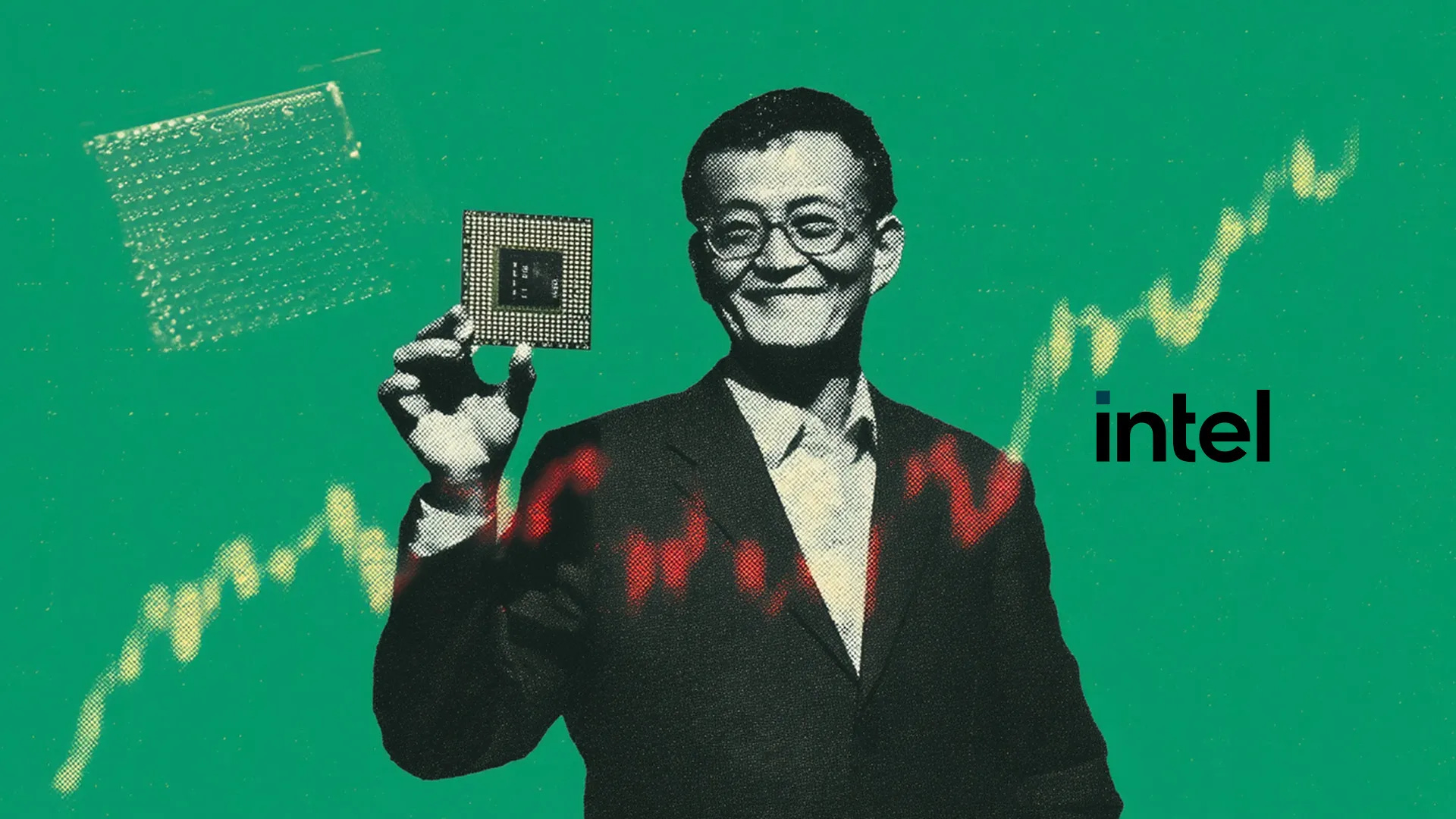
Agents Broke the GPU Monopoly
For three years, most AI infrastructure conversations went the same way: How many Nvidia GPUs? From which cloud? On what lead time? This made sense when the dominant workload was training, but then inference volume overtook training.
People started prompting more while using more and more compute which meant the compute budgets of every AI lab started moving more and more toward inference. Then agents arrived… which took inference demand to an entirely new level.
A single Claude Code task can require dozens of tool calls, code executions, API hits, sandbox retrievals, etc. Each one needs orchestration, memory management, and data movement.
GPUs are terrible at this, but you know what isn’t? CPUs.
Check out the numbers:
Data center CPU-to-GPU ratios are collapsing from 1:8 → 1:4 — they’re moving toward 1:1 in agentic deployments
ARM estimates the AI agent era will need 120M CPU cores per GW vs. 30M today (4x)
NVIDIA’s latest Rubin GPU systems use Intel’s CPUs natively.
The new bottleneck in AI is the compute that orchestrates the actual work agents do, and Intel is the only Western hyperscaler-grade supplier who can meet demand.
The Market Is Waking Up
Intel’s Q1 2026 earnings were absolute cinema.
Revenue came in at $13.6B vs. $12.36B expected
EPS hit $0.29 vs. an analyst consensus of $0.01 (29X over)
Data Center & AI revenue grew 22% year-over-year to $5.1B
Custom AI processor revenue nearly doubled
The stock jumped 25% in a single session
All this to say... they killed it.
The official word from the exec team says it all, “demand is exceeding supply, especially for Xeon [CPUs].”
This caught a lot of bears off-guard.


Insanely High Demand
Now, this is the part I want you to remember: On the Q1 earnings call, Intel’s CFO David Zinsner (a man not known for hyperbole) said the unmet demand for Intel CPUs “Starts with a B — so it’s meaningful.”
aka Intel is billions of dollars short of what customers are asking for.
The supply-constraint signals are everywhere:
Server CPU lead times: six months
Server CPU prices: up 20% since March
Intel publicly deprioritizing consumer CPU production to redirect capacity to data center efforts
AMD’s (Intel’s biggest competitor) lead times blown out to 8-10 weeks
Then, look at who’s locking in supply.
Google just signed a multi-year CPU commitment for its global data centers. Nvidia picked Intel for DGX Rubin. Tesla is co-developing on Intel’s 14A foundry — Intel CEO Lip-Bu Tan said he could think of “no better partner than Elon Musk.”
The most important AI infrastructure companies in the world have effectively endorsed Intel in the last 90 days. What we saw happen in the memory market is now happening with agentic AI and it’s specifically focused on one company producing one component.
3 Things That Break This Thesis
We might see some sort of renewed LLM architecture breakthrough that doesn’t require orchestration or can do so natively at the GPU level (I doubt it though!).
AMD is competing hard (up 17% today on a killer earnings report!). The chipmaker accounts for ~30% of CPUs sold and is gaining ground.
Intel’s manufacturing comeback depends on 18A foundry yields holding up at scale. If they don’t, the foundry losses widen. Yield data is the single most important number to watch over the next two quarters.
If you’re looking for a through line from everything above… It’s that the next Nvidia was the company literally everyone counted out.
For three years, the story was ‘GPUs eat the world.’ Then, over the last seven months, the workload changed, and the bottleneck moved.
If we assume agents are the future (they are imo), then we’ve broken the GPU monopoly. The CPU is cool again.
Thanks for joining us for our latest issue. Now go listen to our podcast :)